Predictive History
Loading narration…
I built an independent reading companion for Predictive History, a YouTube channel about history and geopolitics. I was interested in the reason people turn to it: they want to connect ideas, make sense of a complicated world and form a better picture of what might happen next.
I find some of the channel’s arguments interesting, but I’m skeptical of others and don’t endorse its conclusions. That tension was part of the reason to build this. I wanted to make it easier to examine an argument, check its sources and see how its predictions hold up. I chose a subject people already care about, hoping to build something they would find useful enough to return to.
The app brings the videos into a searchable library with digests, transcripts and links back to the lectures. Readers can follow a concept across episodes rather than treating each video as a separate piece of information. Membership unlocks the full reading library; the different plans provide the same content.
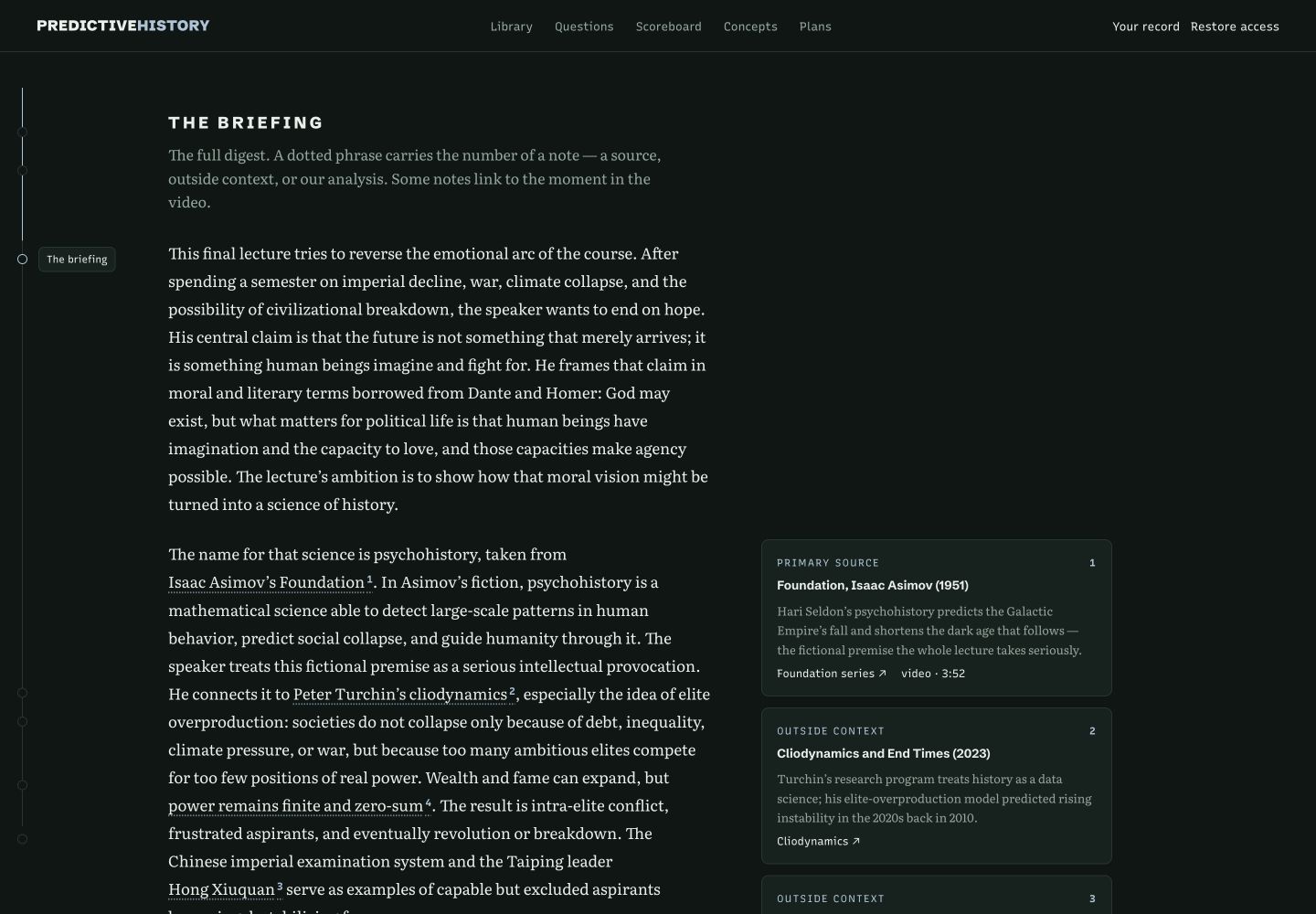
The Psychohistory sample takes that reading experience further. Notes beside the text distinguish primary sources, outside context and analysis. A reader can follow a reference or return to the moment in the lecture that prompted it. On a phone, selecting a note brings its source card into view.
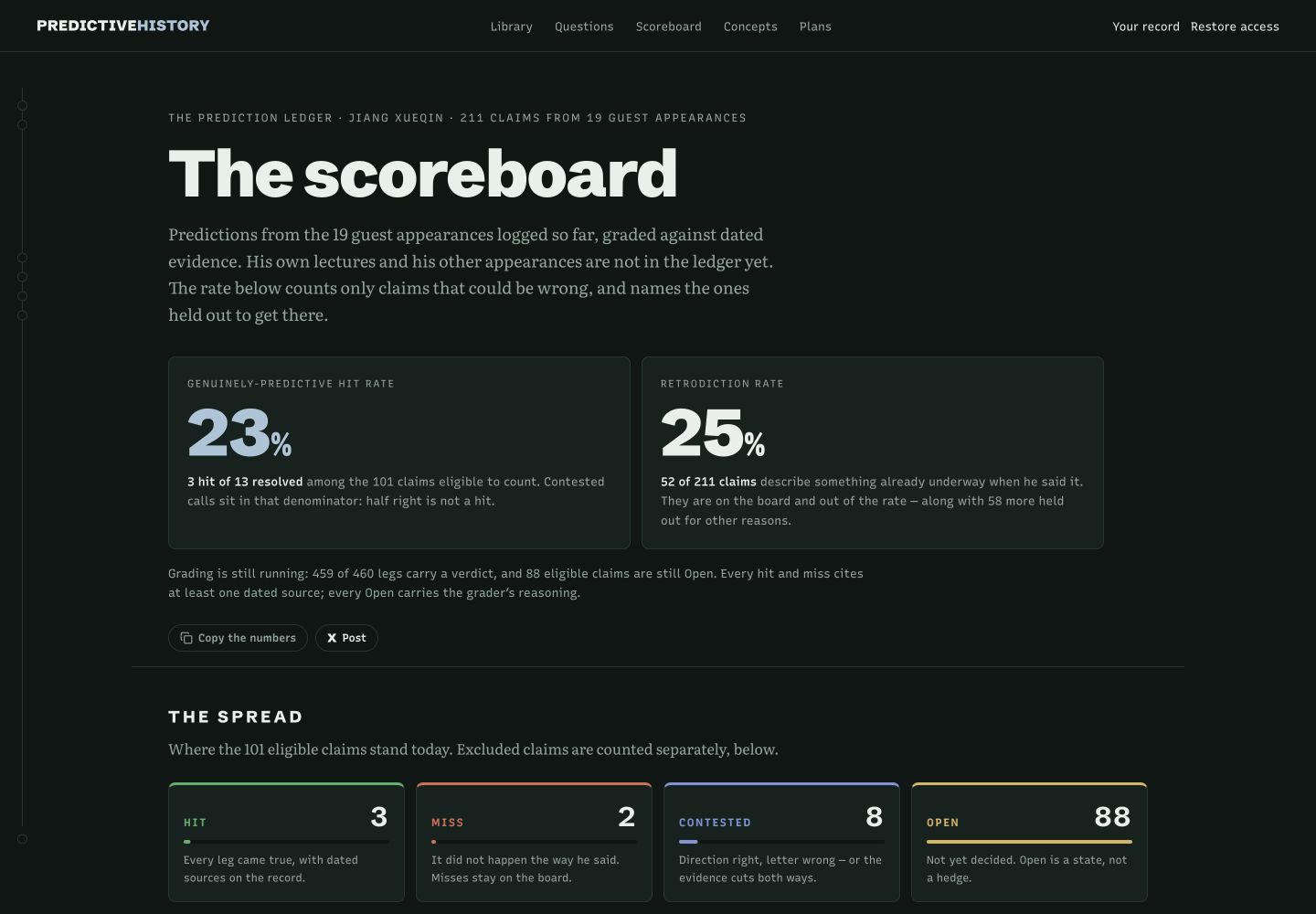
I also built a record of predictions from the professor’s guest appearances. The Scoreboard connects claims to verdicts and dated evidence. Its headline figures show their denominators, and the page explains which claims are excluded and why. The record shown here covers 211 claims from 19 guest appearances; it does not cover every lecture or appearance.
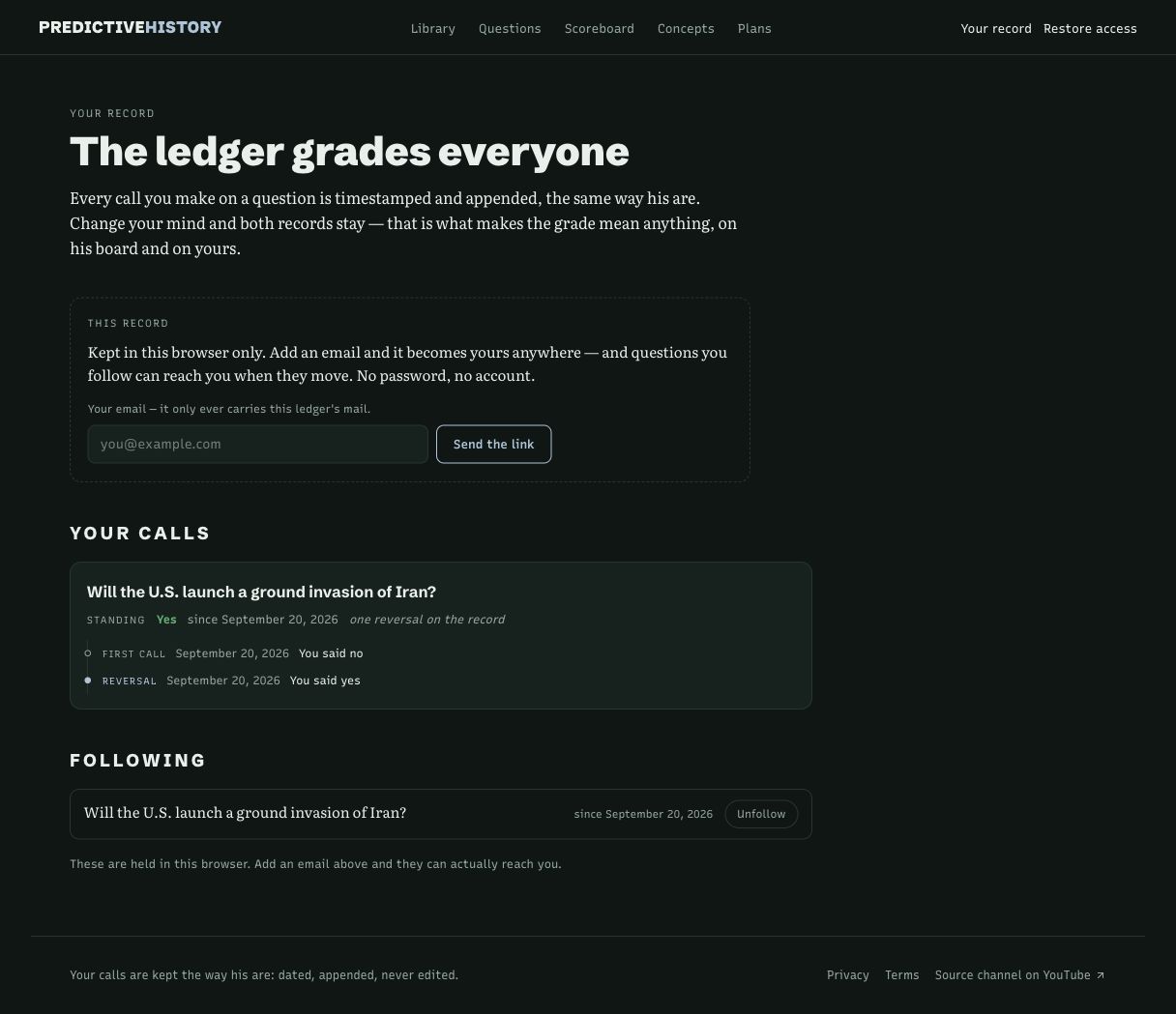
Readers can also make their own predictions on the Questions pages and follow the questions they want to revisit. Their Record keeps those calls dated, including earlier positions when they change their minds. I wanted the same scrutiny to apply to the reader’s own model of the world: what did I expect, what happened, and what would make me reconsider?
These screenshots show the locally reviewed interface from September 2026. The featured sample includes individually prepared notes and claim cards; those are not generated for every lecture. The ledger’s verdicts are editorial assessments.